
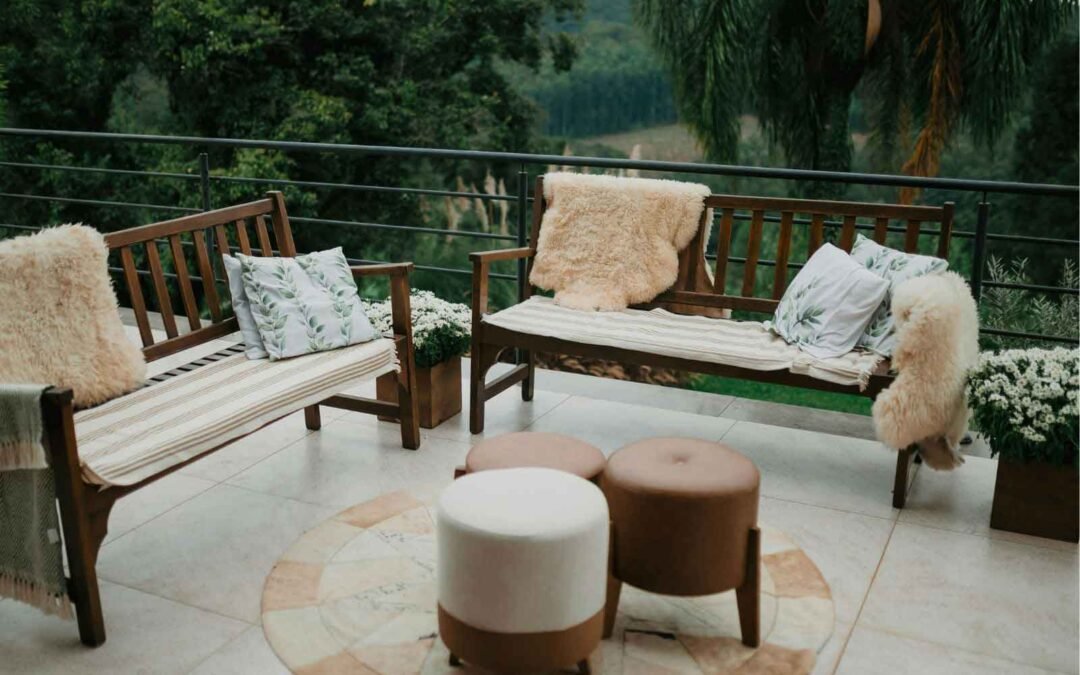
Designing a small patio in Caterham means making the most of every square metre. Many Surrey homes have compact gardens – in fact, UK data shows the median garden size is about 188 m² nationally, with London gardens only ~140 m². In practice, a “small” Caterham garden might be less than 50 m². With such tight space, thoughtful planning is key. Titan Driveways and Patios in Caterham has designed hundreds of intimate patios, so we know that clever layouts and material choices can transform even a tiny yard. In this guide, we’ll walk through expert small patio design ideas tailored to Caterham homes. We’ll cover everything from UK climate considerations and planning rules to furniture, lighting and maintenance – all to help you create a charming, functional patio.
Understanding Small Garden Patio Design in Caterham and the UK
Before picking materials or furniture, it helps to understand what “small” means in UK gardens. Many terraced and semi-detached homes in Caterham have backyards that barely fit a table and a few chairs. For context, the Office for National Statistics reports that London’s median garden size is only about 140 m² (and Caterham’s are similar by regional standards). A suburban Surrey patio might only occupy 15–30 m² of that, so every layout choice counts.
What Counts as a Small Garden in UK Homes
There’s no strict definition, but generally a small garden is anything significantly below the 188 m² UK median. In practice, if you can survey your yard and see only room for a few chairs and planters, you need a space-maximizing design. For example, many Caterham terraces and semi-detached plots only allow for a narrow strip at the back. In such cases, even a 3×4 m patio (12 m²) would be a substantial use of space.
Common Space Challenges in Terraced and Semi-Detached Houses
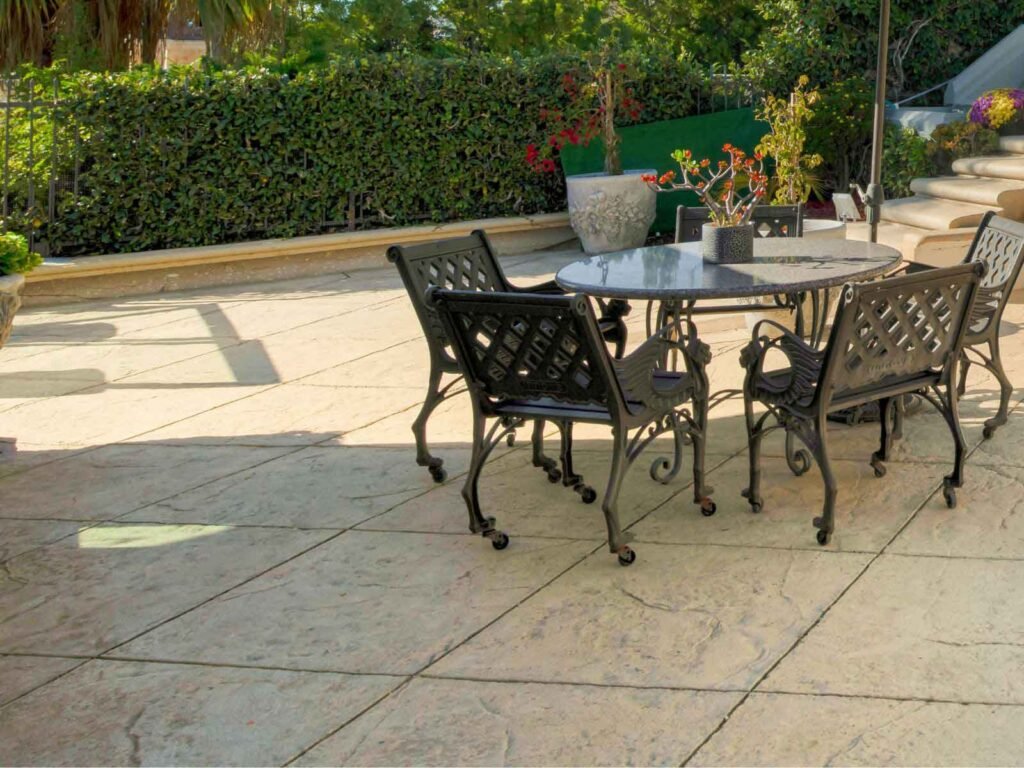
Caterham’s mix of terraced and semi-detached houses often share common challenges:
- Narrow width: Terraced gardens can be long and slim. A long rectangle might seem limiting, but it lets you draw the eye down the length with paving patterns or borders.
- Proximity to neighbours: Side fences close by mean you have to consider privacy (see below).
- Fixed boundaries: You can’t easily change a garden’s shape, so patios often have to fit within existing walls or fences.
- Uneven ground or steps: Some small gardens drop down or have changes in level, requiring careful planning of steps or sloping for drainage.
Each of these challenges can be addressed with design: for example, installing a narrow raised planter or bench along one side can widen the useful area, and multi-level planting can add interest without taking floor space.
UK Climate Considerations for Patio Design
Caterham lies in the UK’s temperate, maritime climate. Winters are cool (often above freezing) and summers are mild, but rain is frequent year-round. Importantly, the UK has had major flooding events in recent decades. The 2007 floods caused about £3 billion in damage, largely because rainwater overwhelmed drainage systems. Government guidance now warns that heavy rain events may become more common due to climate change.
For your patio, this means drainage is crucial (more on that below). You’ll want materials and sub-base that handle frequent rain and occasional frost. For example, frost-resistant porcelain paving or properly sealed natural stone will withstand the wet winter months, while good drainage will prevent pooling and slippery surfaces. Overhead cover (like a pergola) can also extend patio use into wetter seasons.
By anticipating Caterham’s weather – wet winters and unpredictable showers – you can choose materials and gradients that keep the patio usable and safe. For instance, Titan often uses permeable paving or built-in channel drains to handle runoff, turning a potential flood risk into a feature.
Planning the Layout for a Small Patio Space in Caterham
With the context in mind, the next step is the layout. A well-planned layout ensures you don’t waste precious floor area and that the space feels balanced. Good layouts also open up circulation so the patio feels bigger.
Choosing Between Square, Rectangular, or Corner Patios
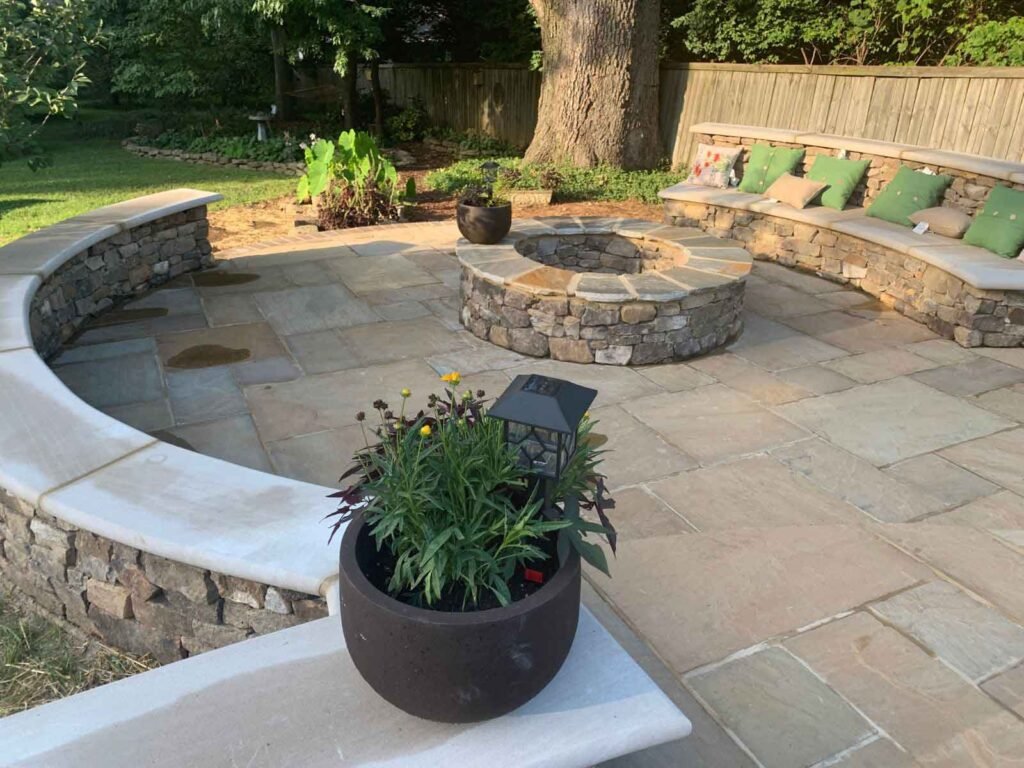
Your available shape will guide this choice. Three common patio shapes are:
- Square or near-square: If your garden is roughly as wide as it is deep, a square patio (e.g. 3×3 m) can provide a cozy central space. Square patios feel orderly and can anchor seating plus a small table in the middle.
- Rectangular (long): For narrow backyards, a long rectangle (say 2×4 m) aligns with the garden’s shape. This maximises depth; you can place a bench along the back and a table in front. Titan often lays rectangular patios the full length of the garden to avoid awkward leftover spaces.
- Corner (L-shaped or irregular): In some yards, a patio in one corner (L-shaped or right-angle) leaves a grassy border or planting area. This can create a “room” effect. An L-shape patio hugging two sides of a corner house wall provides seating on one side and dining on the other.
Often the choice depends on obstacles. For example, if an outbuilding, tree or boundary fence lies to one side, putting a patio in a corner can bypass it. Titan Driveways and Patios will measure the space precisely; even offset corners (cutting around a tree) are possible with angled slabs.
Zoning Ideas for Seating, Dining, and Relaxing
Even a small patio can have zones if planned well:
- Dining zone: A foldaway bistro set or narrow rectangular table can sit against one edge of the patio. In Caterham’s climate, choose a metal or treated wood set so it can stay outside. A round table can fit in a corner or central area, depending on shape.
- Lounge/relaxing zone: Place a bench or couple of chairs at one end. A built-in bench along the fence (see below) can save space versus loose chairs.
- Planting zone: Leave room at the edges for planters or a narrow border. Even a 30 cm strip of greenery against the patio edge softens the transition to the lawn.
Use rugs or different flooring textures to delineate zones. For example, gravel around the edges versus smooth paving in the middle. Titan often recommends a narrow band of gravel or timber decking as a “ribbon” to break up sections without adding walls.
How to Use Garden Boundaries to Maximise Space
Your boundaries – walls and fences – aren’t just obstacles; they can be design assets:
- Built-in seating: A stone or timber bench built into the boundary can provide seating without using up patio floor space. Titan can install a corner seat against a fence, fitting cushions atop.
- Vertical planters: Hanging baskets or trellis planters on walls free the floor. They also bring life up to eye level.
- Mirrors: For very enclosed spaces, a weatherproof garden mirror on a fence can visually double the space (just be considerate of neighbour’s view).
- Edge lighting: Fixing LED strips or uplights to the fence frame the patio at night, again making it feel enclosed and defined.
In short, treat the edges of the patio as part of the layout. A fence isn’t just a limit – it can be a place to lean against, sit on, or decorate. Titan often angles patio corners into fence lines to squeeze out an extra seat or plant.
Best Patio Materials for Small UK Gardens in Caterham
Material choice greatly affects the look and feel of a small patio. Small spaces benefit from materials that look light and are easy to maintain in UK weather. Here are some top options:
Porcelain vs Natural Stone for Compact Patios
Porcelain paving has become very popular for patios. Porcelain slabs are man-made ceramic tiles that mimic stone or concrete. They have some key advantages for small Caterham patios:
- Durability: Porcelain is extremely hard and non-porous. In fact, a recent UK test ranked porcelain with a porosity of only 1/10, versus natural stones like sandstone which were 8–10/10. This means porcelain hardly absorbs water and stains.
- Low maintenance: Because it is non-porous, porcelain doesn’t need sealing and resists moss, lichen or algae. A sweep and occasional wash with soap is usually enough.
- Consistency: Porcelain slabs have uniform colour and size, giving a seamless look that can visually open up a space.
Natural stone (like sandstone, limestone or slate) has a beautiful, organic look. But it tends to be more porous and can show staining or moss if not sealed. (The same UK test showed many natural stones had high organic retention.) Stone often needs periodic sealing to protect it. On the other hand, natural stone offers rich texture and a classic appeal that some homeowners prefer.
For a small Caterham patio, Titan often leans towards porcelain because it stays looking tidy without heavy upkeep. For instance, in a recent Caterham installation we used cream-coloured porcelain slabs; the large 90×60 cm tiles made the space feel open, and the light colour bounced more light into the garden. The result: a bright, modern patio that requires almost no maintenance and resists our damp winters.
Large-format porcelain slabs (like those above) can make a small patio seem more spacious by minimising visible joints and reflecting more light. Porcelain’s hardness and low porosity mean it resists stains and frost far better than many natural stones.
Low-Maintenance Patio Materials for UK Weather
In the UK’s moist climate, low maintenance is a blessing. Some materials to consider:
- Resin-bound gravel: This is crushed stone mixed with resin to form a smooth, porous surface. It’s durable and drains well. Titan can lay a coloured resin surface which gives a continuous look and lets rain soak through, reducing puddles.
- Block paving with kerb edges: Traditional concrete block pavers are durable and come in many colours. They are somewhat permeable if properly jointed. Light-coloured block paving reduces heat absorption.
- Porcelain (again): Worth repeating – it’s one of the lowest-upkeep choices for patios.
- Composite decking: In a very small patio, wood-effect composite boards can simulate decking without the splinters or painting of real wood. They are slip-resistant and long-lasting.
We usually avoid treated softwood decking on small patios, as it can degrade faster in constant damp. If you choose timber, go for premium hardwood or composite. Also note that Titan provides Resin contractors in Caterham, so if a seamless, paved look is wanted, resin-bound surfacing is an option that also handles water runoff well (often a key planning requirement).
Light-Coloured Paving to Make Small Gardens Look Bigger
A powerful visual trick in a small garden is to use lighter colours. Pale paving materials (creams, light greys or sandstone colours) reflect more light and make the space feel airy. Dark stones can make a small area feel heavier and smaller. For example, we often recommend light porcelain or pale limestone for north-facing patios, since they counteract the dimmer light.
Additionally, monotone or subtle patterns keep the eye moving smoothly. Busy patterns or very dark tiles break the continuity and can make a small garden feel more cramped. Titan’s designers prefer large slabs in a single shade with simple grout lines to create the illusion of space.
In summary, the best materials for a small UK patio are those that combine light colour and low porosity: think pale porcelain or gravel, permeable block paving, and any finish that won’t fade or require yearly sealing.
Smart Design Tricks to Make a Small Patio Feel Larger
Beyond materials, certain design tricks can make a big difference in perception. Here are three key ideas:
- Use large-format slabs: Big paving tiles (e.g. 60×60 cm or 90×60 cm) create a sense of space because there are fewer joints. Each large slab can span much of the patio, reducing the visual clutter. Titan often uses large porcelain or stone slabs in small spaces to achieve this effect.
- Minimalist joints and edges: Tidy, thin grout lines and clean edges look modern and streamlined. Avoid irregular or thick mortar joints. Crisp metal or concrete edging along flowerbeds or lawn makes borders neat. In fact, seamless edges can trick the eye into thinking the patio extends into the background.
- Diagonal or herringbone patterns: Laying the paving at a 45° angle to the garden’s boundaries can make a narrow space feel wider. The diagonal lines draw the eye outwards, creating the illusion of extra width. A herringbone brick pattern can do the same. Titan occasionally lays rectangular patios diagonally, especially when the garden is a long rectangle; the end result looks more spacious than straight-laid rows.
Each of these tactics uses visual perspective to fool the eye. In practice, combining them is best. For example, we might install 900×300 mm slabs in a staggered pattern (big tiles, few joints) and lay them on a slight diagonal. The effect makes a small 20 m² patio look bright and roomy.
Furniture Ideas for Small Patio Areas
Outdoor furniture can easily clutter a tiny patio, so choose pieces that serve multiple functions and scale down the footprint:
- Space-saving furniture: Bistro sets (small round tables with two folding chairs) are classic for tight spots. Slimline bistro chairs can tuck under the table or stack away. Bar-height tables against a fence use vertical space while leaving floor area clear underneath. In Caterham’s gardens, Titan often sources British-made metal sets that are weatherproof and foldable.
- Built-in seating and benches: A stone or wooden bench attached to a wall or integrated into raised planting can seat two or three people without extra chairs. Underneath, it can hide storage or a planter. For example, a stone bench with storage box under the lid can hold cushions or tools. Built-ins also double as boundaries or focal points. Titan’s landscaping team regularly designs L-shaped benches along fences for corner patios.
- Foldable and multi-purpose pieces: Folding tables and chairs mean you can clear space when needed. A bench that converts into a table (some designs lift or add extensions) gives flexibility. Lightweight café tables can also become plant stands when not in use. Multi-tier plant stands hold pots plus provide extra shelving for drinks or decor, saving ground space.
Keep furniture proportional. Oversized loungers or deep sofas usually overpower a small patio, so opt for chairs with slender profiles. To extend the usable area, consider accessories like a weatherproof storage box that doubles as extra seating. Titan can advise on custom small- garden furniture: for instance, we once installed a Juliet bench (narrow, under-window seat) that allowed a compact Caterham patio to seat guests comfortably.
Lighting Ideas for Small Garden Patios
Lighting does double duty: it lets you use the patio after dark and also affects the feeling of space and mood. On a small patio, subtle, well-placed lights work best:
- Subtle LED lighting: Low-profile LED strips under the bench edge or under stair treads give a gentle glow without taking up space. An LED uplight in a corner or a warm downlight on a wall highlights features. For example, Titan often mounts slim line LEDs beneath railing or along a low wall. This casts ambient light on the floor and plants, making the patio feel cozy but not enclosed.
- Solar garden lights: In the UK, solar spotlights or bollards can save on wiring. Place solar stake lights along pathways or at edges of the patio border; they cast pools of light that make the area seem larger and safer at night. Stringing a small festoon (light garland) along a fence or pergola also adds height and sparkle. In Caterham, where sunny days can be short in winter, solar options with good battery storage are key.
- Using lighting to create depth and ambience: Layering light sources creates depth. For instance, a wall lantern illuminates the immediate patio, while a down-light from a tree or pergola adds background glow. Lighting a vertical green wall or trellis (see below) can draw the eye upward and make the space feel more three-dimensional. Titan’s design team often proposes a mix of hidden (ground-level) lights with a few accent lights (spotlights on sculpture or plants) to craft ambience without overpowering the scene.
Remember to choose warm-white bulbs (2700–3000K) for coziness. Also, use dimmers or multiple circuits so you can adjust lighting levels. Good lighting lets a small patio feel like an extension of the home, rather than a dark appendage at night.
Privacy Solutions for Small Patio Gardens
Close neighbours and overlooking windows are common in Caterham. Creative screening can make a patio feel like a private retreat:
Garden Screening Ideas for Close Neighbours
- Trellis panels: Timber or metal trellis attached to the top of a fence can add 0.5–1 m of privacy height. Training climbers (ivy, clematis or jasmine) on trellis softens it. Titan recommends a 1.8m fence with a trellis topper in small patios to block views while still letting light through.
- Outdoor blinds or shades: On a pergola or post, install retractable outdoor shades or bamboo blinds along one side. You can roll them down in the evening for privacy and roll up when not needed.
- Tall planters: Lined up along the edge, 1–1.2 m tall planters with shrubs (like bamboo or bay trees) create a living screen. Titan sometimes places slate or metal planters in a row to define the patio boundary with greenery.
Vertical Planters and Green Walls
Using the vertical space for plants not only adds privacy but also greenery without eating patio floor area. Ideas include:
- Living trellis: A dedicated green wall panel or pallet garden mounted to a fence, filled with ferns, ivies or succulents, instantly adds a natural barrier.
- Stacked pots: Special tiered planters (three or more pots stacked) provide height. One stack per corner of the patio can subtly divide space.
- Bamboo or fast-growing climbers: Bamboo in a tall planter will shoot upwards quickly. By the next spring, you can have a 2 m high screen. Ensure roots are contained to avoid invasive spread.
Green screens can also improve air quality and aesthetics. However, check with Titan about weight and maintenance (some walls can’t take heavy planter loads).
Fencing and Trellis Options for Small Spaces
If planting isn’t practical, solid options work too. For example:
- Close-boarded or feather-edge fences: These wooden panels (up to 2 m high under permitted development) can provide immediate privacy. Choosing a pale stain or paint brightens them.
- Composite or vinyl fence panels: Low maintenance and available in various heights and styles, these stay looking new longer in wet climates.
- Decorative metal screens: Laser-cut steel panels with patterns (like leaves) give privacy and style. They can be backlit at night for effect.
- Glass panels: Frosted or tinted glass screens can block sight lines while still passing light. A low-height glass barrier on top of a wall can also stop sightlines.
Be mindful of UK regulations: in most back gardens fences up to ~2 m are allowed without permission. Titan always checks local rules, but for typical rear patios this isn’t usually an issue (see Planning section below).
Drainage and Practical Considerations
Ignoring drainage in a small UK patio can lead to big problems (standing water, slippery surfaces, planning headaches). Keep these practicalities in mind:
Proper Drainage for Small UK Garden Patios
In the UK’s wet climate, a good fall (slope) on the patio is vital so rainwater flows off. As government guidance notes, even patios and driveways should “control and reduce rainfall runoff” using permeable surfaces or soakaways. What Titan does for good drainage:
- Slope paving slightly: We grade the sub-base so that water gently runs towards planting borders or drainage channels (1–2% slope is enough).
- Permeable paving: Using gravel or porous block paving allows some water to seep through. Titan often installs block pavers with sanded joints that drain, or lays gravel in a narrow trench at the edge to act as a soakaway.
- Linear drains or channel drains: We sometimes place a slim stainless-steel channel drain (invisible or decorative) along the edge if water must be diverted to a downpipe or soakaway pit.
- Rain gardens: If planting space is adjacent, directing patio runoff into a planted rain garden (a shallow depression) naturally absorbs water. Government advice for front gardens applies equally here.
For example, on a compact Caterham patio, we might run the last paver row at a slight angle, dumping excess water into the lawn or a gravel strip. This avoids any pooling. Remember, paving over an entire garden with impermeable material can increase local flood risk, so modern practice (and planning rules) favours permeability.
Slip-Resistant Surfaces for Safety
Wet patios can be slippery. To keep small patios safe:
- Textured paving: Choose slabs or blocks with a non-slip texture (many porcelain ranges offer R10 or higher slip resistance). For a small patio, rough-sawn sandstone or a riven porcelain tile provides grip.
- Anti-slip treatments: Clear anti-slip sealers or strips can be added to smooth surfaces. Titan can apply an invisible coating that increases friction.
- Avoid algae traps: We recommend against smooth dark stones in full shade; these encourage moss. As RHS points out, moss and algae grow more on shaded, damp paving, so reducing shade (pruning back overhangs) and keeping surfaces dry will naturally improve grip.
- Regular cleaning: See below. A buildup of leaves or dirt makes slipping more likely, so keep the patio clear.
Planning Permission Rules for Patios in the UK
Good news: most small patios are covered by permitted development rights and need no planning permission. According to the UK Planning Portal, “there are no restrictions on the area of land you can cover with hard surfaces at, or near, ground level” for houses. In other words, in a typical Caterham back garden you can lay patio or driveways without a formal application.
Exceptions include: listed buildings (which need listed building consent for any changes) or extensive earthworks (retaining walls or big terraces). Also, front gardens have extra rules: paving more than 5 m² with impermeable materials does require permission (unless it’s porous). Titan always checks if your project might infringe local rules – for example, if your house has an Article 4 direction – but in the vast majority of rear-patio cases in Caterham, you’re fine. (However, do inform Titan if you’re in a conservation area or near protected trees, just to be sure.)
In summary: no planning needed for a modest rear patio. Titan will still advise on structural considerations, but you won’t have to go through planning unless your proposal is unusually large or involves new walls.
Budget-Friendly Small Patio Design Ideas
A small patio doesn’t have to break the bank. Even on a tight budget, clever choices deliver style and longevity.
Affordable Patio Materials Without Compromising Style
- Reclaimed stone or bricks: Second-hand brick or reclaimed Yorkstone can look beautiful and cost less than new. Titan sometimes recovers materials from demolition sites; laid carefully, reclaimed slabs have character. Just be sure any reclaimed slabs are still sound and non-porous.
- In-situ concrete: A simple concrete patio with a brushed finish can be economical. Adding a washed gravel border can dress it up. Titan’s block-paving contractors note that good-quality concrete, properly laid, can last decades and can be etched or stamped for texture.
- Compromise sizes: Instead of large custom sizes, using standard smaller blocks (easier to ship and handle) can cut material cost. Smaller tiles also mean less waste if cuts are needed.
Phased Patio Installation for Smaller Budgets
If funds are limited, consider splitting the project:
- Phase 1 – Hardscape foundation: Lay the core patio slab or paving first. This establishes the main usable area for entertaining.
- Phase 2 – Add features: Later, add benches, planters, or lighting when budget allows.
- Phase 3 – Greenery and decor: Planting beds or decorative elements can be done last.
Working in phases allows you to spread costs. Titan can help plan a phased build – for example, doing just 50% of the paving now, with the rest matching later. Even a “skeleton patio” with one type of slab looks nice while you save for more features.
Long-Term Cost Savings with Quality Materials
Investing in quality upfront often saves money over time. A well-built patio with good foundations and weatherproof materials means:
- Less maintenance: Avoid repeated repairs or replacements. For instance, well-installed porcelain may cost more initially than cheap concrete, but it won’t crack or stain easily, so it lasts much longer.
- Avoid costly mistakes: Engaging professionals (see below) prevents situations like uneven slabs or poor drainage that would require expensive fixes later.
- Energy and water efficiency: Permeable paving can reduce your flood risk (and hence insurance issues). LED lighting saves electricity.
In sum, think of patio spend as a long-term investment. Titan’s experience shows that choosing slightly better materials or workmanship often pays off, especially under the UK’s harsh weather. Even on a budget, ask the contractor (like Titan) about the life expectancy of materials to gauge true cost.
Maintaining a Small Patio in the UK Climate
Small patios are easier to maintain than large ones, but the UK’s damp climate does mean some routine care is needed to keep them looking good and safe.
Preventing Algae and Moss Growth
With shade and rain, algae, lichens and moss easily settle on hard surfaces. The RHS notes that while these growths don’t damage paving, they can make it slippery. To prevent green film on your patio:
- Sweep regularly: A stiff push broom used weekly will stop debris from providing a base for algae. Titan recommends doing this more often in autumn when leaves fall.
- Remove overhanging shade: Prune back shrubs and trees near the patio. More sunlight and airflow discourages moss. Even on a small patio, cutting back one overhanging branch can make a big difference.
- Ensure drainage: As mentioned, a slight slope avoids puddles where moss loves to grow. If your patio tends to hold water, that’s an invitation for algae.
- Use porous paving: Permeable materials allow the patio to dry faster. If a sealed concrete patio is already there, Titan might suggest applying a breathable sealant.
- Gravel or sand between pavers: Keeping joints packed with coarse sand or gravel (as opposed to rich soil) also limits places for moss to start.
In short, sunshine, airflow and dryness are the remedies. A small patio is easy to inspect and tidy, so simply paying attention after wet weather will prevent major buildup.
Easy Cleaning Tips for Small Patio Areas
When growth or stains do appear, tackle them promptly:
- Brushing and weeding: Manually remove moss by using a pointed weeding knife to scrape it out of joints, and then stiff-brush the area. This is labour-intensive but effective on small patios.
- Pressure washing: On durable paving, a gentle pressure wash can quickly clean slabs (though avoid too high a pressure on porous stone or fresh grout). If drainage is poor, be cautious – runoff from a power wash can flood surrounding areas.
- Eco-friendly cleaners: RHS advises using a mild eco cleaner or even a washing-up liquid solution on paving. There’s no need for harsh chemicals. For example, a diluted vinegar wash can clean porcelain without damage.
- Avoid sealers on stone: If you have natural stone, don’t seal it to try to stop moss – that can backfire. Instead, use algae control sprays (biological, spray-and-leave products) during winter. Titan can recommend approved treatments to apply a few times a year if needed.
- Clear debris: Remove fallen leaves, bird droppings or spilled materials quickly. These organic messes feed algae growth.
With these simple steps (sweeping, washing and a little plant control), a small patio can stay fresh year-round. Titan always advises clients to clean patios in spring and autumn – the ideal times to give everything a sweep and hose-down.
Seasonal Maintenance Checklist
To keep a small Caterham patio in top shape, here’s a quick checklist:
- Spring: Remove winter cover (from furniture), sweep surfaces, apply an algae-removing spray if needed, and check joints haven’t washed out.
- Summer: Wipe away any bird droppings and flush out gravel joints if they’re accumulating dirt. Trim back fast-growing plants at the edges.
- Autumn: Rake leaves off the patio daily to avoid staining and mould. Prune back shrubs that have crept over the patio edge.
- Winter: Avoid using rock salt (it can stain). Sand on frosty nights can give traction on smooth slabs. Inspect for any cracks or loose edges to address in spring.
Maintaining a small patio requires less effort than a big one – you’ll likely notice problems quicker because the space is contained. Titan offers annual maintenance checks, which are especially useful if you have delicate stonework.
Why Professional Patio Design Makes a Difference
Even though patios seem simple, professional design can save time, money and headaches. Here are some advantages of hiring experts like Titan Driveways and Patios for small garden patios in Caterham:
Benefits of Expert Patio Planning for Small Gardens
- Maximised space: Professionals are trained to see opportunities others miss. We often spot a nook or odd corner to extend the patio or suggest a clever corner seat layout that beginners wouldn’t.
- Climate-appropriate choices: Titan’s team has experience with local weather and soil. We know which underlays and sub-bases prevent sinking in heavy Surrey clay, and which plants work best.
- Compliance and safety: We ensure the construction meets building regulations (like making sure steps are a safe height). We also handle any required drainage planning – as noted, miscalculating drainage can lead to waterlogged patios or planning issues.
- Cohesive design: Professionals look at the big picture. For instance, if you want a patio door to open onto the space, we’ll align paving patterns to it so the effect is seamless.
Avoiding Costly Design Mistakes
Common DIY mistakes include:
- Poor drainage, leading to puddles or flooding (risking neighbour disputes).
- Uneven paving, causing trip hazards.
- Incompatible materials (like mixing two natural stones that weather very differently, resulting in an uneven look over time).
- Overlooking utility access, such as manholes or meter boxes that need to remain accessible.
Titan’s experience means we proactively prevent these issues. For example, we check for drains and cables before digging. We ensure the patio’s fall directs water safely. This prevents the costly fixes that can follow amateur errors. In fact, our clients often remark that after a Titan installation, they feel confident enough to sell or rent the property – a testament to the quality.
Increasing Property Value with a Well-Designed Patio
A professionally designed patio can significantly boost a home’s appeal in Caterham’s market. Outdoor living space is highly sought-after in the UK. While we don’t have a specific study to cite here, multiple estate agents note that a well-built patio and garden can give buyers the impression of extra usable “room,” which can translate into higher offers.
By contrast, a scruffy, neglected yard can drag down value. Titan’s clean lines, quality materials and structural know-how mean your patio will not only last, but also look like it was part of the original house design. This attention to detail – proper drainage, smooth transitions, integrated lighting – turns a simple patio into an extension of your home.
In other words, when done right, a small patio isn’t just an expense; it’s an investment. It enhances enjoyment and has the potential to improve resale value. We encourage you to discuss with a Titan consultant how your patio design choices align with long-term value.
Conclusion
Designing the perfect patio for a small garden in Caterham involves balancing creativity, practicality and local conditions. By understanding UK garden sizes and climate challenges, choosing smart layouts, and picking the right low-maintenance materials, you can make even a compact outdoor space feel like a charming retreat. Clever tricks – large-format pale paving, minimal joints, diagonal patterns – can visually enlarge your patio. The right lighting and screening add ambiance and privacy, while robust drainage and slip-resistant finishes keep it safe year-round.
Titan Driveways and Patios brings real-world experience to every project. Our Caterham paving contractors will assess your garden’s unique challenges – whether it’s shade, slopes, or limited width – and propose solutions that save space and budget. We aim to deliver an attractive patio without costly mistakes, so you can relax knowing the job is done right.
Ready to create your dream small patio? Contact Titan Driveways and Patios for a free quote and expert advice. Our local team of patio contractors in Caterham can guide you through design, planning, and construction, turning your small garden into an inviting outdoor living area. Enjoy your patio year-round and see how a well-designed space can enrich your home life (and even your home’s value).